
Species
Spinosaurus aegyptiacus
Stromer, 1915 · 100.5–93.9 Ma · Cenomanian
The original fossils were destroyed in a bombing raid on Munich in April 1944. Everything argued about this animal since has been argued from Stromer's drawings, from photographs, and from material found later and somewhere else.
That is the reason the reconstruction keeps moving. It is not that the evidence is weak — it is that the animal has never been assembled from one skeleton anybody can go back and re-measure.
DinosauriaSaurischiaTheropodaMegalosauroideaSpinosauridae
Specimens
The physical material the animal is built from.
- IPHG 1912 VIII 19lost
- Bayerische Staatssammlung für Paläontologie, MunichPartial jaw, dorsal vertebrae with elongate neural spines, ribsStromer's original material. Destroyed on the night of 24–25 April 1944.
- FSAC-KK 11888neotype
- Université Hassan II, CasablancaPartial skeleton including vertebrae, pelvis and hindlimbKem Kem Group, Morocco. The basis of the 2014 and 2020 reconstructions.
How the reconstruction changed
The fossils did not change. The way they were read did.
1915
Stromer's original description
A large bipedal theropod with a sail. Described from the Bahariya material and drawn before anything else was known about the group.
Stromer, E. (1915) — reference not yet verified
2005
The skull re-examined
New cranial material narrowed the snout and revised the size estimate. The crocodile-like feeding apparatus becomes explicit.
Dal Sasso, C., Maganuco, S., Buffetaut, E. & Mendez, M. A. (2005)
2014
Shortened hindlimbs, semiaquatic reading
A new partial skeleton produced much shorter hindlimbs than any other large theropod, and the animal was reinterpreted as semiaquatic.
Ibrahim, N. et al. (2014)
2020
The tail fin
Tall, thin neural spines down the tail were described as a propulsive fin, moving the animal from a shoreline wader to a swimmer.
Ibrahim, N. et al. (2020)
2022
The rebuttal
A reanalysis of centre of mass, bone density and swimming mechanics argued the animal was a shoreline predator that could not pursue prey underwater.
Sereno, P. C. et al. (2022)
What is known, and how
Every claim carries the kind of evidence behind it.
Direct Fossil Evidence
The skull was long, narrow and low, carrying straight conical teeth with no serrations.
Direct Fossil Evidence
The dorsal vertebrae carried greatly elongated neural spines, reaching about 1.65 m, forming a sail over the back.
Direct Fossil Evidence
The limb bones are dense and compact, with reduced medullary cavities, unlike those of other large theropods.
Strong Inference
It ate fish.
Strong Inference
Dense bone functioned as ballast for submersion, as it does in living animals that forage underwater.
Debated
Whether it pursued prey underwater or fished from the shallows. The same bones support both readings, and the argument is live.
Debated
The limb proportions, and whether the animal habitually moved on two legs or four.
Debated
What the sail was for — display, thermoregulation, or a fat-storage hump.
Speculative Reconstruction
The colour and covering of the sail in life. Display structures in living animals are usually patterned, but nothing about that patterning fossilises here.
Pop Culture Myth
That Spinosaurus was a land predator capable of killing a Tyrannosaurus. It comes from a 2001 film, it was never a scientific claim, and the two animals lived about 30 million years and an ocean apart.
Every statement above is tagged with how it is known, not just what is known. Read the scale
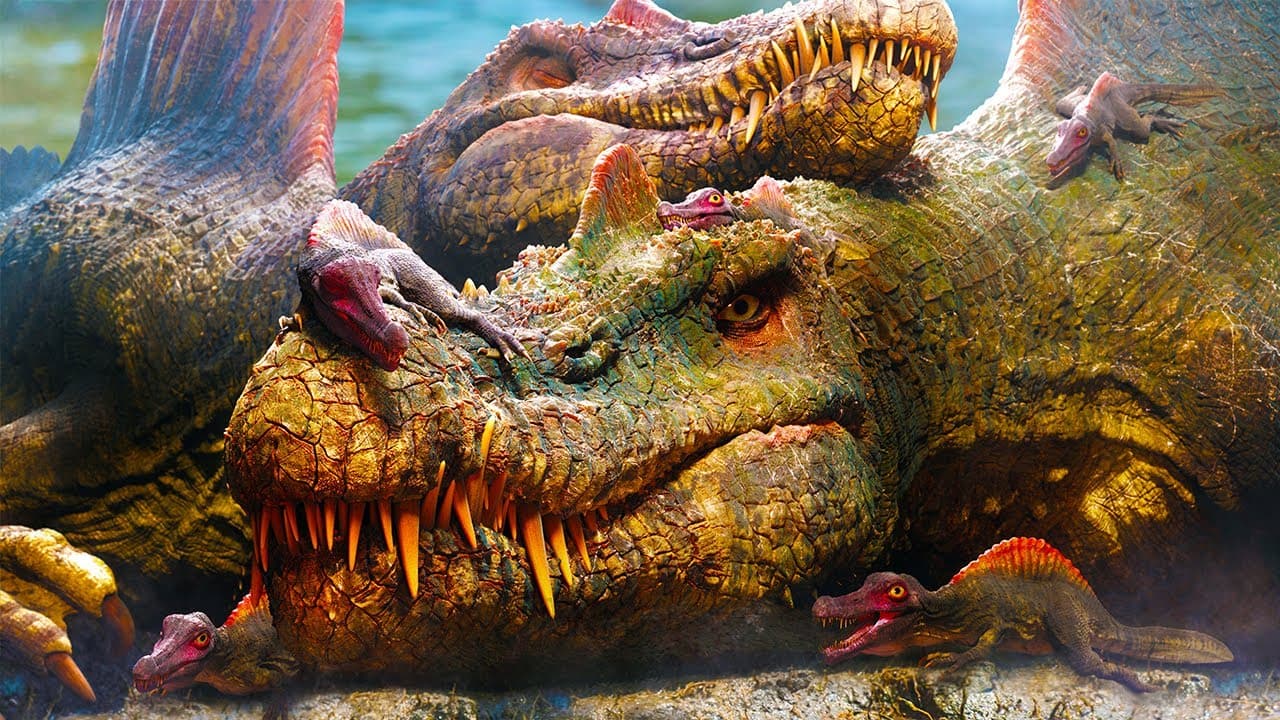
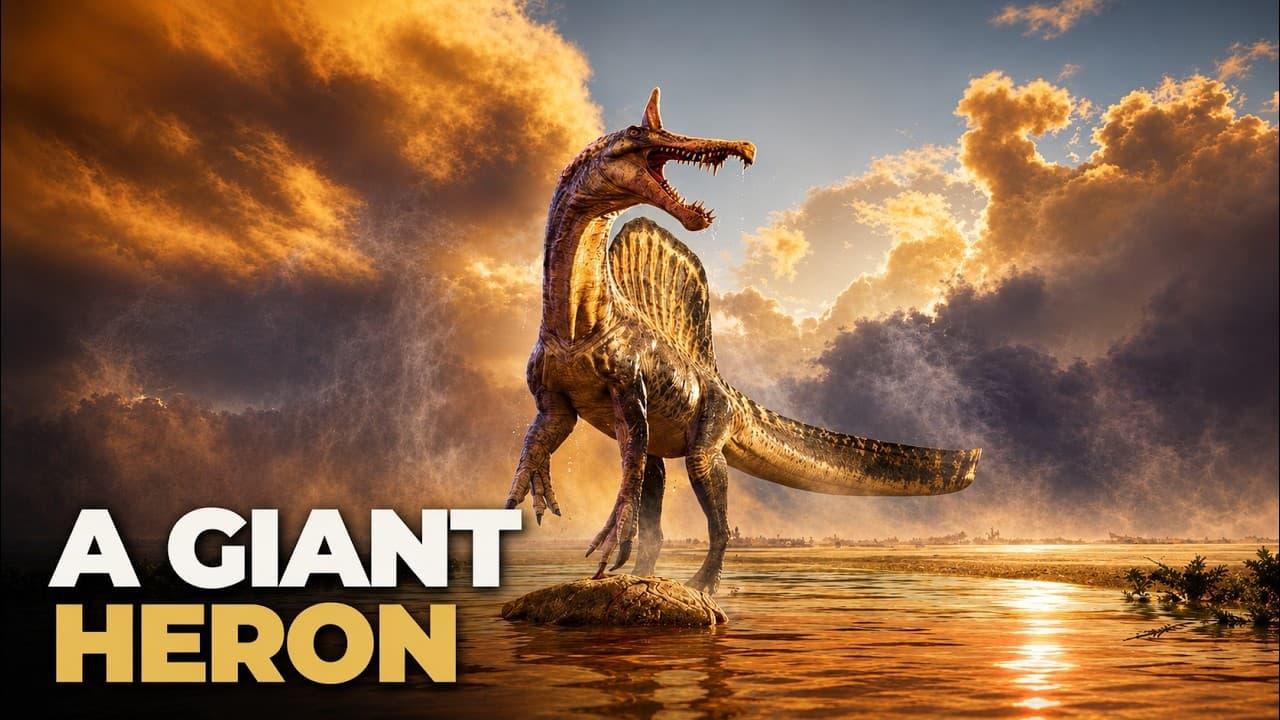
In the documentaries
References
- Dal Sasso, C., Maganuco, S., Buffetaut, E. & Mendez, M. A. (2005). New information on the skull of the enigmatic theropod Spinosaurus, with remarks on its size and affinities. Journal of Vertebrate Paleontology 25(4): 888–896. 10.1671/0272-4634(2005)025[0888:NIOTSO]2.0.CO;2
- Ibrahim, N. et al. (2014). Semiaquatic adaptations in a giant predatory dinosaur. Science 345(6204): 1613–1616. 10.1126/science.1258750
- Fabbri, M. et al. (2022). Subaqueous foraging among carnivorous dinosaurs. Nature 603: 852–857. 10.1038/s41586-022-04528-0
- Ibrahim, N. et al. (2020). Tail-propelled aquatic locomotion in a theropod dinosaur. Nature 581: 67–70. 10.1038/s41586-020-2190-3
- Sereno, P. C. et al. (2022). Spinosaurus is not an aquatic dinosaur. eLife 11: e80092. 10.7554/eLife.80092
- Bailey, J. B. (1997). Neural spine elongation in dinosaurs: sailbacks or buffalo-backs?. Journal of Paleontology 71(6): 1124–1146. 10.1017/S0022336000036076
- Stromer, E. (1915). Ergebnisse der Forschungsreisen Prof. E. Stromers in den Wüsten Ägyptens. II. Wirbeltier-Reste der Baharije-Stufe. 3. Das Original des Theropoden Spinosaurus aegyptiacus. Abhandlungen der Königlich Bayerischen Akademie der Wissenschaften, Mathematisch-physikalische Klasse 28(3).Not yet verified. No claim on this site cites it.